What I set out to build
We've made it easier than ever to connect with people online, but somehow harder to actually meet them.
Most social platforms encourage us to carefully curate how we present ourselves. Meanwhile, we walk past people every day who might share our interests, without ever knowing it.
We wanted to make meeting new people feel spontaneous again, without the pressure of immediately putting yourself out there.
My contribution
- I focused heavily on the infrastructure behind Face2Face, helping build and integrate the Cloudflare backend with our Swift iOS application.
- This involved working with D1, Durable Objects, and Better Auth, and getting the backend and frontend communicating properly.
- Getting the entire system deployed and working on an actual iPhone within the hackathon deadline was one of the parts I was most proud of.
Problem & approach
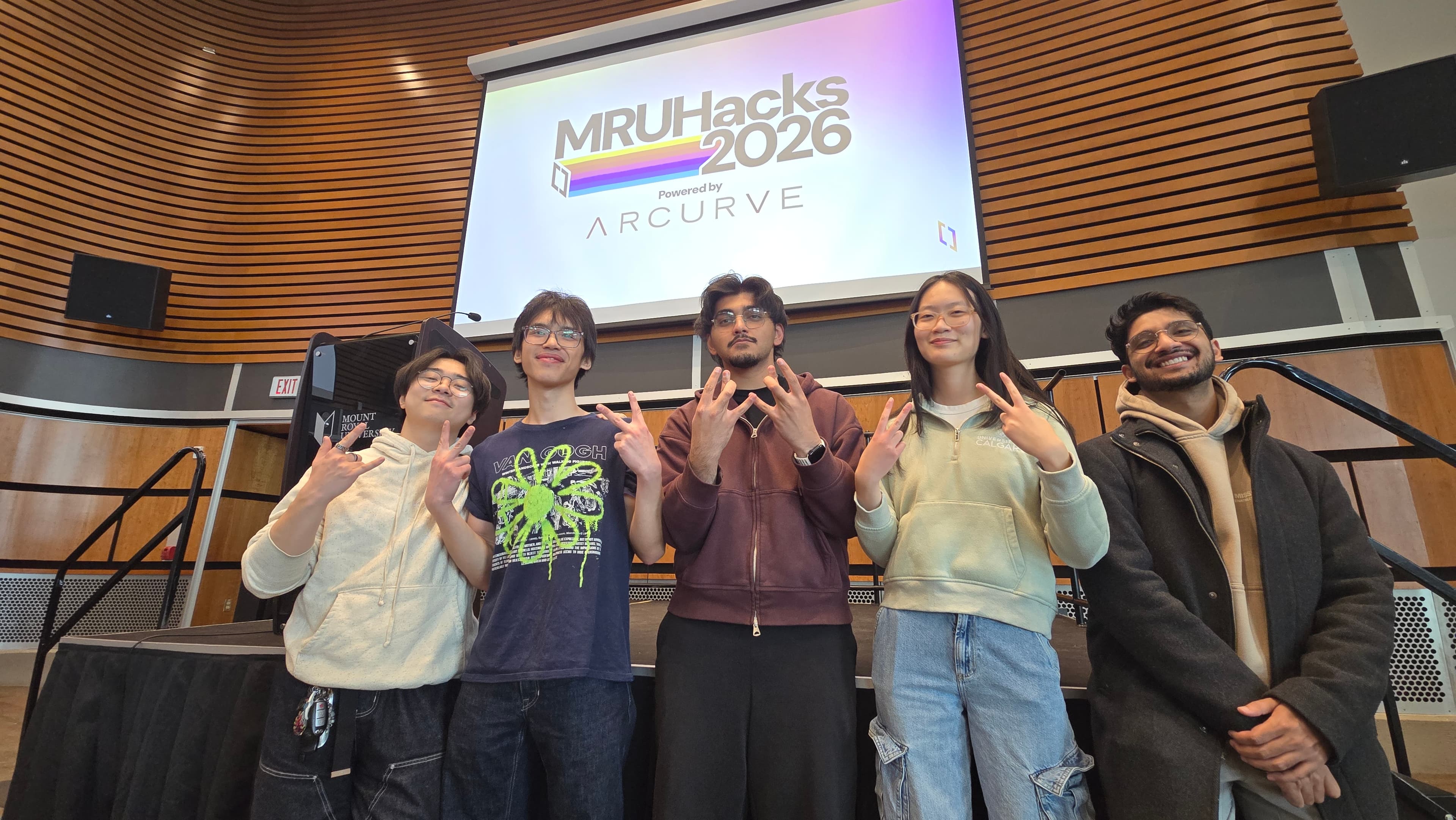
For MRUHacks 2026, we were challenged to bring back an old technology. Our team took inspiration from Nintendo 3DS StreetPass and reimagined it for modern smartphones.
We built Face2Face, an iOS app that lets people discover others nearby through Bluetooth and shared interests. Users can start conversations anonymously, reveal their profiles when comfortable, or find communities through an interest-based forum. Full overview Face2Face combines nearby discovery, anonymous messaging, and community events into one app.
We used Swift for the native iOS frontend, with Cloudflare D1 for data storage, Durable Objects for backend infrastructure, and Better Auth for authentication.
The biggest challenge was bringing all of these technologies together in just 36 hours. By the end of the hackathon, we had a working application running on a physical iPhone and had won second place at MRUHacks 2026.
How it works
- 01
Set Up Profile
Create an account and select your interests.
- 02
Discover People Nearby
Enable Bluetooth to find other Face2Face users with matching interests.
- 03
Start a Conversation
Message someone anonymously and share your profile when you're comfortable.
- 04
Find your Community
Browse interest-based forum posts, RSVP to events, or organize your own.
Data & evaluation
Data & inputs
Face2Face uses user-selected interests, Bluetooth-based nearby discovery, account information, messages, and community posts to help people find and connect with each other.
How it was evaluated
The main validation was getting the full application running on a physical iPhone by the end of the hackathon, rather than presenting just a design or simulation.
The project was also recognized with a second-place finish at MRUHacks 2026.
Results & progress
- 2nd
- Place
- 36h
- Hackathon
- 5
- Developers
- We successfully delivered a working native iOS application within 36 hours, integrating Bluetooth-based discovery, anonymous messaging, authentication, and community features.
- Face2Face placed second at MRUHacks 2026.
Screenshots
Limits & lessons
Limitations
- Face2Face was built in 36 hours, so our priority was getting the core experience working end to end.
- Before a wider release, we'd want to spend more time testing Bluetooth discovery in different environments, handling unreliable connections, and improving the privacy and security of anonymous interactions.
What I learned
- This project taught me a lot about getting different technologies to work together under a tight deadline.
- Building individual features is one thing, but connecting authentication, databases, backend services, and a native mobile frontend into something that actually works is another.
- It also reinforced how important it is to make decisions quickly, communicate clearly with your team, and prioritize getting a working product into people's hands.
Next steps
- I'd like to improve the reliability of nearby discovery, refine the messaging experience, and test how the app performs with more people using it in the same space.
- The longer-term goal would be to see whether Face2Face genuinely helps people form connections they otherwise wouldn't have made.